Today in History, June 18th
On June 18, 1815, Napoleon was defeated at Waterloo. Plus the start of the War of 1812 and Sally Ride's first flight into space.
Published · Last updated
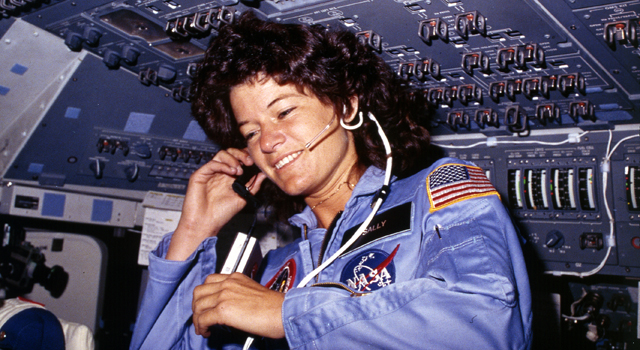
June 18 is best known for 1815, when Napoleon was defeated at the Battle of Waterloo in present-day Belgium. The date also saw James Madison sign a declaration of war against Britain in 1812 and Sally Ride become the first American woman in space in 1983.
The big story: Napoleon meets his Waterloo (1815)
Napoleon had already been beaten and sent off to the island of Elba once. Early in 1815 he slipped back into France and raised a new army, and by June 18 he was facing the Duke of Wellington’s allied force near Waterloo, about 12 miles south of Brussels. Each side had roughly 70,000 men on the field. Napoleon held off his attack until midday so the rain-soaked ground could dry, a delay that bought time for the Prussian army under Gebhard von Blücher to reach the battlefield. By late afternoon about 30,000 Prussians were pushing on the French flank. The French captured a key farmhouse around 6 p.m., but Napoleon was slow to send in reinforcements, and once a final French attack was thrown back, the allies advanced and the French retreat fell apart. France lost about 25,000 killed and wounded plus 9,000 captured. Napoleon abdicated four days later and spent his last six years in exile on Saint Helena.
More events on June 18
| Year | What happened |
|---|---|
| 1429 | Joan of Arc led the French army against the English at the Battle of Patay. |
| 1778 | About 15,000 British troops under Sir Henry Clinton pulled out of Philadelphia after nearly nine months of occupation. |
| 1812 | President James Madison signed a declaration of war against Great Britain, starting the War of 1812. |
| 1873 | Susan B. Anthony was fined for voting in the 1872 presidential election. She refused to pay. |
| 1934 | President Franklin D. Roosevelt signed the Indian Reorganization Act, which gave tribes more self-government and reversed decades of federal policy. |
| 1940 | Broadcasting from London, Charles de Gaulle urged the French to keep fighting after France fell to Nazi Germany. |
| 1960 | Arnold Palmer shot a 65 to win the U.S. Open at Cherry Hills Country Club in Denver, beating a field that included Ben Hogan and a young amateur named Jack Nicklaus. |
| 1972 | A Trident jetliner crashed just after takeoff from London’s Heathrow Airport, killing 118 people in what became known as the Staines air disaster. |
| 1979 | Jimmy Carter and Leonid Brezhnev signed the SALT II nuclear arms treaty in Vienna. It never formally took effect. |
| 1983 | Sally Ride launched aboard the space shuttle Challenger and became the first American woman in space. |
| 2006 | Katharine Jefferts Schori was elected presiding bishop of the Episcopal Church, the first woman to lead a national church in the Anglican Communion. |
| 2023 | The submersible Titan imploded on a dive to the wreck of the Titanic, killing all five people aboard. |
Born on June 18
- 1886: George Mallory, British mountaineer who led early attempts on Mount Everest, born in Mobberley, Cheshire.
- 1942: Paul McCartney, Beatle and one of the best-selling solo artists ever, born in Liverpool, England.
- 1942: Roger Ebert, the first film critic to win a Pulitzer Prize, born in Urbana, Illinois.
Sources
- Napoleon defeated at Waterloo, History.com
- This Day in History: June 18, History.com
- On This Day: June 18, Encyclopaedia Britannica
- George Mallory, Encyclopaedia Britannica
- Paul McCartney, Encyclopaedia Britannica
- Roger Ebert, Encyclopaedia Britannica


