Today in History, September 18th
On September 18, 1793, George Washington laid the cornerstone of the U.S. Capitol. Plus the Mukden Incident and Scotland's 2014 independence vote.

Published · Last updated
September 18 is best known for 1793, when George Washington laid the cornerstone of the U.S. Capitol. The date also brought the Mukden Incident in 1931, which opened Japan’s takeover of Manchuria, and Scotland’s 2014 vote to stay in the United Kingdom.
The big story: Washington lays the Capitol cornerstone (1793)
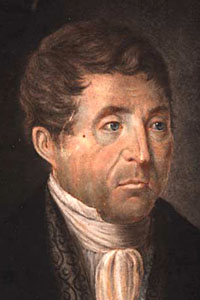
The Capitol got off to a bumpy start. Pierre Charles L’Enfant, the French engineer who laid out the new federal city, was fired in 1792 after clashing with the commissioners in charge. A design contest for the Capitol followed, and William Thornton’s entry won. On September 18, 1793, President Washington set the building’s cornerstone in place. Then came the slow part. Congress moved into the finished north wing in November 1800. The House got the south wing in 1807, and it was done in 1811. Three years later, on August 24, 1814, British troops set the Capitol on fire during the War of 1812, and a rainstorm kept it from burning to the ground. Congress met in temporary quarters until 1819. A major expansion began in the 1850s, paused in 1861 when Union soldiers used the building as barracks and a hospital, and eventually produced the cast-iron dome. All told, the building took close to a century to finish.
More events on September 18
| Year | What happened |
|---|---|
| 1634 | Anne Hutchinson arrived in the Massachusetts Bay Colony (Old Style). Her religious meetings later led to a heresy trial and her banishment in 1637. |
| 1931 | Japanese troops used a small explosion on a Japanese-run railway as an excuse to seize Mukden (now Shenyang), the start of Japan’s conquest of Manchuria. |
| 1961 | UN Secretary-General Dag Hammarskjöld died in a plane crash near Ndola, in what is now Zambia, while on a peace mission. The cause is still debated. |
| 1970 | Rock guitarist Jimi Hendrix died in London at 27. |
| 1975 | Newspaper heiress Patty Hearst, kidnapped by the Symbionese Liberation Army in 1974, was captured in San Francisco and arrested for armed robbery. |
| 1976 | More than a million people gathered in Beijing for the funeral of Mao Zedong, who had died on September 9. |
| 2014 | Scottish voters went to the polls in an independence referendum and chose to remain part of the United Kingdom. |
| 2020 | Supreme Court Justice Ruth Bader Ginsburg died at her home in Washington, D.C., at 87. She had served on the Court since 1993. |
Born on September 18
- 1819: Léon Foucault, French physicist whose pendulum showed Earth’s rotation, born in Paris.
- 1905: Greta Garbo, Swedish American film star of Anna Karenina and Camille, born in Stockholm.
- 1961: James Gandolfini, actor who played Tony Soprano, born in Westwood, New Jersey.
Sources
- Capitol cornerstone is laid, History.com
- U.S. Capitol Building, Architect of the Capitol
- Anne Hutchinson arrives in America, History.com
- Mukden Incident, Encyclopaedia Britannica
- Dag Hammarskjöld, Encyclopaedia Britannica
- Patty Hearst captured, History.com
- Funeral of Mao Zedong, History.com
- Scottish independence referendum, GOV.UK
- Press release on the death of Justice Ruth Bader Ginsburg, Supreme Court of the United States
- Greta Garbo, Encyclopaedia Britannica