Today in History, November 2nd
On November 2, 1948, Harry Truman upset Thomas Dewey despite the polls. Plus the Balfour Declaration and the first crew aboard the space station.
Published · Last updated
November 2 is best known for 1948, when President Harry S. Truman upset Thomas E. Dewey in the presidential election that pollsters had already handed to Dewey. The date also brought the Balfour Declaration in 1917 and the arrival of the first resident crew aboard the International Space Station in 2000.
The big story: Truman defeats Dewey (1948)
Almost everyone who was paid to predict the 1948 election got it wrong. Polls and pundits had New York Governor Thomas E. Dewey, the Republican, comfortably ahead, and Truman had been polling poorly for months. His own party was split. His civil rights proposals had angered Southern Democrats, and Strom Thurmond ran against him as the States’ Rights candidate. Truman’s answer was to get on a train. In the campaign’s final weeks he crossed the country on a whistle-stop tour, casting himself as an outsider fighting a “do-nothing” Congress. On November 2, 1948, the voters sided with him, and he won by just over two million popular votes. The Chicago Tribune had gone to press too early, printing an edition with the banner headline “DEWEY DEFEATS TRUMAN.” Truman was later photographed holding up a copy, and the picture became an icon of the upset.
More events on November 2
| Year | What happened |
|---|---|
| 1889 | North Dakota and South Dakota were admitted to the Union as the 39th and 40th states. |
| 1898 | Johnny Campbell jumped a fence to lead University of Minnesota fans in a cheer, a moment credited with starting organized cheerleading in the U.S. |
| 1917 | British Foreign Secretary Arthur Balfour wrote to Lionel Rothschild expressing support for a national home for the Jewish people in Palestine. The letter became known as the Balfour Declaration. |
| 1930 | Tafari Makonnen was crowned emperor of Ethiopia and took the name Haile Selassie. |
| 1936 | The BBC officially launched its first television channel, the world’s first regular TV service. |
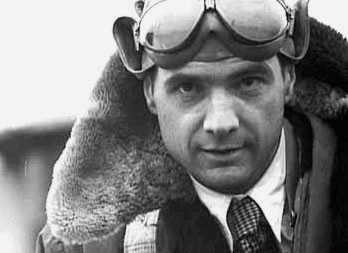
| 1947 | Howard Hughes piloted his giant flying boat, the “Spruce Goose,” on its only flight, which covered about a mile. |
| 1960 | A British jury found D.H. Lawrence’s Lady Chatterley’s Lover not obscene, clearing Penguin Books to publish the full text. |
| 1963 | South Vietnamese President Ngo Dinh Diem and his brother were killed after a military coup. |
| 1976 | Jimmy Carter was elected the 39th U.S. president, narrowly defeating Gerald R. Ford. |
| 1983 | President Ronald Reagan signed a bill making the third Monday in January a federal holiday honoring Martin Luther King Jr. |
| 1988 | Robert Morris released the first computer worm onto the internet, bringing about 6,000 computers to a halt. |
| 2000 | The first resident crew, one American and two Russians, arrived at the International Space Station. |
Born on November 2
- 1755: Marie-Antoinette, future queen of France, born in Vienna.
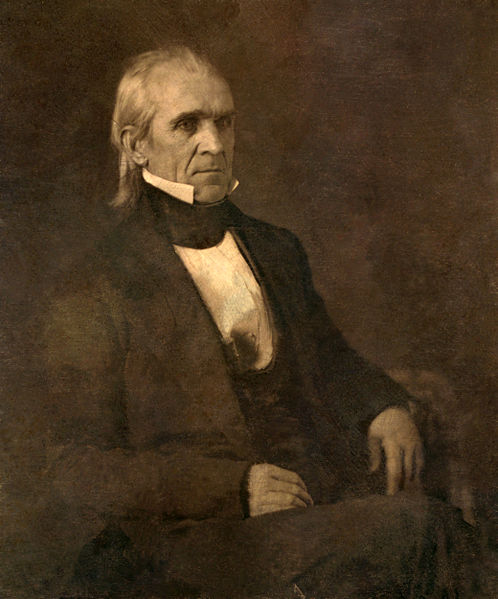
- 1795: James K. Polk, 11th president of the U.S., born in Mecklenburg County, North Carolina.
- 1865: Warren G. Harding, 29th president of the U.S., born in Corsica (now Blooming Grove), Ohio.
- 1913: Burt Lancaster, film actor and producer, born in New York City.
Keep reading
Sources
- Truman defeats Dewey, History.com
- United States presidential election of 1948, Encyclopaedia Britannica
- This Day in History: November 2, History.com
- On This Day: November 2, Encyclopaedia Britannica
- First residential crew arrives aboard International Space Station, History.com
- Marie-Antoinette, Encyclopaedia Britannica
- James Polk is born, History.com
- Warren G. Harding, Encyclopaedia Britannica
- Burt Lancaster, Encyclopaedia Britannica