Today in History, June 5th
On June 5, 1947, George Marshall proposed the Marshall Plan at Harvard. Plus the Six-Day War begins and the first CDC report on AIDS.
Published · Last updated
June 5 is best known for 1947, when Secretary of State George C. Marshall used a Harvard speech to propose the American aid program that became the Marshall Plan. The date also marks the start of the Six-Day War in 1967 and the first CDC report on what became known as AIDS in 1981.
The big story: George Marshall proposes the Marshall Plan (1947)
Two years after World War II ended in Europe, much of the continent was still in ruins. Secretary of State George C. Marshall had come away from a spring foreign ministers’ conference in Moscow alarmed that the Soviets were backing away from earlier deals on Europe’s recovery. On June 5, 1947, he used an invitation to speak at Harvard to sketch a different approach. Europeans would draw up their own recovery program, and the United States would pay for it. The offer was open to all of Europe, the aid would be time-limited, and once urgent needs were met, the money would go toward rebuilding. Marshall also took a swipe at those who would “perpetuate human misery,” widely read as a jab at the communists. That summer, 16 European countries worked out the details. Congress approved the Economic Cooperation Act in March 1948, starting with $4 billion. By the time the program wound down nearly four years later, the U.S. had sent more than $12 billion.
More events on June 5
| Year | What happened |
|---|---|
| 1944 | With the weather still poor, Gen. Dwight Eisenhower set June 6 as D-Day, and about 3,000 Allied ships crossed the English Channel toward Normandy. |
| 1956 | Elvis Presley performed “Hound Dog” on The Milton Berle Show, hips and all. Critics hated it, and the uproar helped make him a national star. |
| 1963 | British War Secretary John Profumo resigned after admitting he had lied to Parliament about an affair with Christine Keeler. |
| 1967 | Israel launched a preemptive air strike on Egypt, starting the Six-Day War. By the June 11 ceasefire, Israel had taken Sinai, Gaza, the West Bank, East Jerusalem and the Golan Heights. |
| 1968 | Senator Robert F. Kennedy was shot shortly after midnight at the Ambassador Hotel in Los Angeles, after winning the California primary. He died the next day. |
| 1981 | The CDC’s Morbidity and Mortality Weekly Report described five young gay men in Los Angeles with a rare pneumonia, now seen as the first scientific report of the AIDS epidemic. |
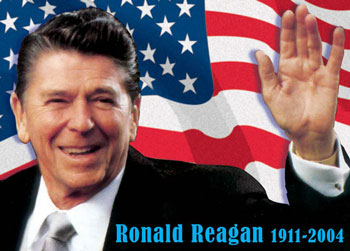
| 2004 | Former President Ronald Reagan, the 40th president, died after a long struggle with Alzheimer’s disease. |
| 2013 | The Guardian published the first report from Edward Snowden’s leaked documents, revealing that the NSA was collecting Americans’ phone records. |
Born on June 5
- 1883: John Maynard Keynes, economist whose General Theory reshaped thinking on unemployment and recessions, born in Cambridge, England.
- 1898: Federico García Lorca, Spanish poet and playwright of Blood Wedding, born in Fuente Vaqueros, Spain.
- 1934: Bill Moyers, White House press secretary under Lyndon Johnson and longtime PBS journalist, born in Hugo, Oklahoma.
Keep reading
Sources
- George Marshall calls for aid to Europe, History.com
- The Marshall Plan, George C. Marshall Foundation
- This Day in History: June 5, History.com
- Allies prepare for D-Day, History.com
- Six-Day War begins, History.com
- Bobby Kennedy is assassinated, History.com
- First scientific report on AIDS published, History.com
- John Maynard Keynes, Encyclopaedia Britannica
- Federico García Lorca, Encyclopaedia Britannica
- Bill Moyers, Encyclopaedia Britannica