Today in History, July 4th
On July 4, 1776, the Continental Congress adopted the Declaration of Independence. Plus the deaths of Jefferson and Adams and Vicksburg's fall.
Published · Last updated
July 4 is best known for 1776, when the Continental Congress adopted the Declaration of Independence in Philadelphia. The date also saw Thomas Jefferson and John Adams die on the same day in 1826 and Vicksburg surrender to Ulysses S. Grant in 1863.
The big story: Congress adopts the Declaration of Independence (1776)
The decision to break with Britain had already been made. On July 2, Congress approved the resolution for independence, with 12 colonies in favor and New York sitting it out. What remained was the explanation to the world, and that took longer than expected. Delegates worked over the draft, largely Thomas Jefferson’s, all through July 3 and into the late morning of July 4, cutting and changing passages before they adopted it. That night, printer John Dunlap ran off copies, and the next morning copies went out to assemblies, committees and Army commanders. Twenty-six of those first broadsides are known to survive. One popular belief does not hold up: the delegates did not line up to sign on July 4. The clean parchment copy was ordered on July 19 and signed on August 2, with John Hancock, the president of Congress, signing first, boldly, below the text. Fifty-six men eventually signed it.
More events on July 4
| Year | What happened |
|---|---|
| 1802 | The United States Military Academy opened at West Point, New York. |
| 1817 | Workers broke ground on the Erie Canal at Rome, New York. |
| 1826 | Former presidents Thomas Jefferson and John Adams died within hours of each other, 50 years to the day after the Declaration was adopted. |
| 1845 | Henry David Thoreau moved to his retreat at Walden Pond. |
| 1855 | Walt Whitman’s self-published first edition of Leaves of Grass came out. |
| 1863 | Confederate General John C. Pemberton surrendered Vicksburg to Union General Ulysses S. Grant. |
| 1865 | Lewis Carroll’s Alice’s Adventures in Wonderland was published, though the first print run was recalled. |
| 1884 | France formally presented the completed Statue of Liberty to the United States in a ceremony in Paris. |
| 1939 | Lou Gehrig called himself “the luckiest man on the face of the earth” in a speech on his appreciation day. |
| 1946 | The Philippines became an independent republic, with Manuel Roxas as its first president. |
| 1997 | NASA’s Mars Pathfinder landed on Mars, the first U.S. spacecraft to reach the surface in more than 20 years. |
| 2012 | Scientists at CERN announced they had found a signal likely produced by the Higgs boson. |
Born on July 4
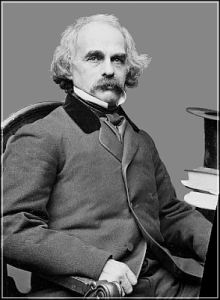
- 1804: Nathaniel Hawthorne, author of The Scarlet Letter, born in Salem, Massachusetts.
- 1807: Giuseppe Garibaldi, Italian patriot and general who helped unify Italy, born in Nice.
- 1872: Calvin Coolidge, 30th president of the U.S., born in Plymouth, Vermont.
- 1927: Neil Simon, one of the most successful playwrights in U.S. theater, born in the Bronx, New York.
Sources
- The Declaration of Independence: A History, National Archives
- American colonies declare independence, History.com
- This Day in History: July 4, History.com
- On This Day: July 4, Encyclopaedia Britannica
- Nathaniel Hawthorne, Encyclopaedia Britannica
- Giuseppe Garibaldi, Encyclopaedia Britannica
- Calvin Coolidge, Encyclopaedia Britannica
- Neil Simon, Encyclopaedia Britannica