Today in History, July 28th
On July 28, 1914, Austria-Hungary declared war on Serbia, starting World War I. Plus the 14th Amendment and the Bonus Army's eviction.
Published · Last updated
July 28 is best known for 1914, when Austria-Hungary declared war on Serbia, the step that turned a Balkan crisis into World War I. The date also saw the 14th Amendment formally adopted in 1868 and federal troops drive the Bonus Army out of Washington, D.C., in 1932.
The big story: Austria-Hungary declares war on Serbia (1914)
A month to the day after a Serbian nationalist killed Archduke Franz Ferdinand and his wife in Sarajevo, Vienna made its move. On July 23, with Germany promising its full support, Austria-Hungary handed Serbia a harsh ultimatum. Serbia agreed to every demand but one. That was not enough. Britain floated an international conference to cool things down, but Germany opposed it and urged Vienna to act fast. On July 28, 1914, Austria-Hungary declared war, and that night its guns briefly shelled Belgrade from across the Danube. Russia, Serbia’s protector, ordered partial mobilization the same day. The alliances then fell like dominoes. Germany declared war on Russia on August 1, France and Germany were at war by August 3, and Germany’s plan to march through neutral Belgium brought Britain in on August 4. The United States and Italy stayed neutral, at least at first. A regional quarrel had become a world war.
More events on July 28
| Year | What happened |
|---|---|
| 1868 | Secretary of State William Seward certified the 14th Amendment, which guaranteed citizenship to everyone born or naturalized in the U.S. and promised “equal protection of the laws.” |
| 1932 | U.S. Army troops under Douglas MacArthur forcibly cleared the Bonus Marchers out of Washington, D.C. |
| 1942 | Soviet leader Joseph Stalin issued Order No. 227, threatening harsh penalties for soldiers who retreated. |
| 1945 | A U.S. Army bomber crashed into the Empire State Building, killing 14 people. |
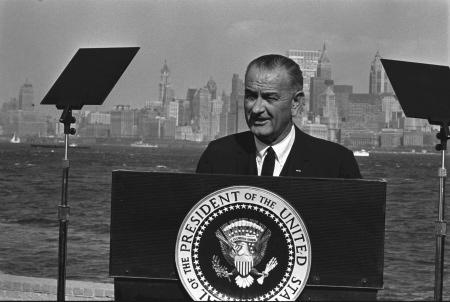
| 1965 | President Lyndon Johnson announced he would raise U.S. troop strength in Vietnam from 75,000 to 125,000. |
| 1968 | The American Indian Movement (AIM) was founded at a meeting in Minneapolis. |
| 1975 | The grizzly bear was listed as a threatened species under the Endangered Species Act. |
| 1976 | An earthquake leveled the Chinese industrial city of Tangshan, killing more than 240,000 people. |
| 1978 | National Lampoon’s Animal House opened in U.S. theaters. |
| 1996 | Two men found a human skull in a Washington state park. The remains, later known as Kennewick Man, proved to be more than 9,000 years old. |
| 2016 | Hillary Clinton accepted the Democratic presidential nomination, the first woman to head a major U.S. party’s ticket. |
Born on July 28
- 1844: Gerard Manley Hopkins, innovative English poet of the Victorian era, born in Stratford, Essex.
- 1866: Beatrix Potter, author and illustrator of The Tale of Peter Rabbit, born in South Kensington, London.
- 1929: Jacqueline Bouvier Kennedy (later Onassis), first lady to President John F. Kennedy.
Keep reading
Sources
- Austria-Hungary declares war on Serbia, History.com
- 14th Amendment adopted, History.com
- This Day in History: July 28, History.com
- On This Day: July 28, Encyclopaedia Britannica
- Gerard Manley Hopkins, Encyclopaedia Britannica
- Beatrix Potter, Encyclopaedia Britannica
- Future first lady Jacqueline Bouvier Kennedy is born, History.com

