Today in History, July 21st
On July 21, 1861, the Confederates routed the Union at the First Battle of Bull Run. Plus the Scopes verdict and the space shuttle's final landing.
Published · Last updated
July 21 is best known for 1861, when Confederate forces routed the Union Army at the First Battle of Bull Run, the first major land battle of the Civil War. The date also saw John T. Scopes convicted for teaching evolution in 1925 and the space shuttle program end with Atlantis’s landing in 2011.
The big story: The First Battle of Bull Run (1861)
Early in the Civil War, plenty of Northerners expected one big push to finish things. General Irvin McDowell marched about 34,000 mostly green Union troops toward Manassas, a rail junction roughly 30 miles from Washington, D.C. Confederate general P.G.T. Beauregard waited there with about 20,000 men, and Joseph Johnston brought about 9,000 more by train. Hundreds of civilians, children included, came out to watch what they assumed would be a show. On July 21, 1861, the Union pressed hard at first, but on Henry House Hill a Virginia brigade under Thomas J. Jackson refused to budge, earning him the nickname “Stonewall.” J.E.B. Stuart’s cavalry seized Union guns, Beauregard hit the exposed Union right, and McDowell’s line broke. The retreat across Bull Run became a panicked run back toward the capital. The Union lost about 3,000 killed, wounded or missing; the Confederates, about 2,000. The idea of a quick, cheap war died that afternoon.
More events on July 21
| Year | What happened |
|---|---|
| 365 | A tsunami triggered by a major earthquake off Greece struck Alexandria, Egypt. |
| 1774 | The Treaty of Küçük Kaynarca ended the Russo-Turkish War of 1768–74. |
| 1798 | Napoleon’s Army of Egypt beat Murād Bey’s forces at the Battle of the Pyramids. |
| 1865 | Wild Bill Hickok killed Dave Tutt in Springfield, Missouri, in what may have been the first true quick-draw shootout of the Old West. |
| 1925 | Teacher John T. Scopes was convicted in Tennessee for teaching evolution, ending the so-called Trial of the Century. |
| 1954 | The Geneva Accords effectively split Vietnam in two at the 17th parallel. |
| 1960 | Sirimavo Bandaranaike became prime minister of Ceylon (now Sri Lanka), the world’s first woman prime minister. |
| 1961 | Virgil “Gus” Grissom became the second American in space. |
| 1970 | Egypt’s Aswan High Dam on the Nile was completed after 11 years of work. |
| 1983 | Vostok Station in Antarctica recorded the lowest temperature ever measured on Earth, −128.6 °F (−89.2 °C). |
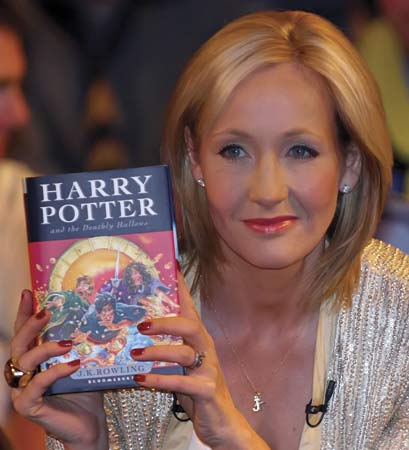
| 2007 | Harry Potter and the Deathly Hallows, the last book in J.K. Rowling’s series, was released. |
| 2011 | Atlantis landed at Kennedy Space Center, ending NASA’s space shuttle program after 135 missions. |
Born on July 21
- 1899: Ernest Hemingway, American novelist known for spare, understated prose, born in Oak Park, Illinois.
- 1911: Marshall McLuhan, Canadian communications theorist who said “the medium is the message,” born in Edmonton, Alberta.
- 1938: Janet Reno, the first woman to serve as U.S. attorney general, born in Miami.
Sources
- The First Battle of Bull Run, History.com
- This Day in History: July 21, History.com
- On This Day: July 21, Encyclopaedia Britannica
- Ernest Hemingway is born, History.com
- Marshall McLuhan, Encyclopaedia Britannica
- Janet Reno, Encyclopaedia Britannica