Today in History, April 9th
On April 9, 1865, Robert E. Lee surrendered at Appomattox, effectively ending the Civil War. Plus Marian Anderson at the Lincoln Memorial.
Published · Last updated
April 9 is best known for 1865, when Robert E. Lee surrendered to Ulysses S. Grant at Appomattox Court House, effectively ending the American Civil War. The date also saw Marian Anderson sing at the Lincoln Memorial in 1939 and U.S.-led forces take Baghdad in 2003.
The big story: Lee surrenders at Appomattox (1865)
By the second week of April 1865, Robert E. Lee’s army was out of road. Union troops had pushed him out of Richmond, cut him off from Confederate forces in North Carolina and captured thousands of his men at Sayler’s Creek. Desertions were climbing, food was scarce, and by April 8 his army was surrounded. On April 9, Lee sent word that he would surrender. Around 1 p.m., he and Ulysses S. Grant met in the parlor of Wilmer McLean’s house in the village of Appomattox Court House, Virginia. Grant’s terms were generous. Lee’s roughly 28,000 men were pardoned and allowed to go home with their private property, horses included, so they could plant spring crops. Officers kept their side arms, and the hungry Confederates received Union rations. The surrender of the South’s most famous army effectively ended the Civil War.
More events on April 9
| Year | What happened |
|---|---|
| 1388 | The Swiss Confederation won a major victory at the Battle of Näfels in its early struggle against Habsburg rule. |
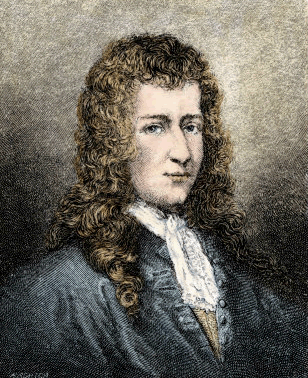
| 1682 | The explorer René-Robert Cavelier, sieur de La Salle, claimed the Mississippi River basin for France and named it Louisiana. |
| 1859 | Samuel Clemens, later known as Mark Twain, received his steamboat pilot’s license. |
| 1939 | Barred from Constitution Hall, singer Marian Anderson performed for about 75,000 people on the steps of the Lincoln Memorial. |
| 1940 | Germany invaded Norway and Denmark. |
| 1942 | About 78,000 troops surrendered to Japan on the Bataan Peninsula in the Philippines, the largest U.S. surrender on record. |
| 1945 | Dietrich Bonhoeffer, a Lutheran pastor and anti-Nazi theologian, was hanged by the Nazis at Flossenbürg. |
| 1947 | The Journey of Reconciliation, often called the first Freedom Ride, left Washington, D.C. |
| 1959 | NASA introduced America’s first seven astronauts to the press. |
| 1963 | Congress made Winston Churchill an honorary U.S. citizen. |
| 2003 | U.S.-led forces took Baghdad, a moment marked by the toppling of a statue of Saddam Hussein. |
| 2005 | Prince Charles married Camilla Parker Bowles in a civil ceremony at Windsor Guildhall. |
Born on April 9
- 1898: Paul Robeson, singer, actor and activist, born in Princeton, New Jersey.
- 1918: Jørn Utzon, Danish architect who designed the Sydney Opera House, born in Copenhagen.
- 1919: J. Presper Eckert, engineer who co-built ENIAC, an early electronic computer, born in Philadelphia.
- 1921: Mary Jackson, mathematician who became NASA’s first Black female engineer, a native of Hampton, Virginia.
Sources
- Robert E. Lee surrenders, History.com
- This Day in History: April 9, History.com
- What happened on April 9, Encyclopaedia Britannica
- Paul Robeson, Encyclopaedia Britannica
- Jørn Utzon, Encyclopaedia Britannica
- J. Presper Eckert, Encyclopaedia Britannica
- Mary W. Jackson Biography, NASA