Today in History, April 8th
On April 8, 1974, Hank Aaron hit his 715th home run to pass Babe Ruth. Plus the Seventeenth Amendment and the 2024 solar eclipse.
Published · Last updated
April 8 is best known for 1974, when Hank Aaron hit his 715th home run and passed Babe Ruth as baseball’s all-time home run leader. The date also saw the Seventeenth Amendment ratified in 1913, giving voters the power to elect U.S. senators directly, and a total solar eclipse sweep across North America in 2024.
The big story: Hank Aaron passes Babe Ruth (1974)
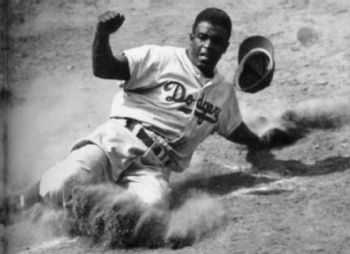
Babe Ruth’s 714 career home runs looked like a number nobody would ever touch. Then Hank Aaron of the Atlanta Braves started closing in, and the closer he got, the uglier some of his mail became. He received death threats and racist hate letters through the chase, which made what should have been pure joy a strained, guarded experience. On April 8, 1974, in front of 53,775 fans at Atlanta-Fulton County Stadium, the biggest crowd the ballpark had ever held, Aaron faced Al Downing of the Los Angeles Dodgers in the fourth inning. He sent the pitch over the fence for home run No. 715. Aaron kept hitting until he retired in 1976 with 755 home runs, a record that held until Barry Bonds broke it in 2007. For many fans, Aaron’s quiet dignity under pressure mattered as much as the number itself.
More events on April 8
| Year | What happened |
|---|---|
| 1820 | Pieces of the statue now known as the Venus de Milo were found on the Aegean island of Melos. |
| 1838 | The steamship Great Western left Bristol, England, for New York City, starting the first regular transatlantic steamer service. |
| 1864 | President Abraham Lincoln authorized the charter of the first U.S. college for Deaf students, today’s Gallaudet University. |
| 1904 | Britain and France signed the Entente Cordiale, settling their colonial disputes in North Africa. |
| 1913 | The Seventeenth Amendment was ratified, letting voters, not state legislatures, elect U.S. senators. |
| 1935 | Congress approved the Works Progress Administration as part of Franklin Roosevelt’s New Deal. |
| 1950 | India’s Jawaharlal Nehru and Pakistan’s Liaquat Ali Khan signed the Delhi Pact to give refugees safe passage. |
| 1973 | Pablo Picasso died in France at 91. |
| 1993 | Ellen Ochoa flew aboard the space shuttle Discovery, becoming the first Hispanic woman in space. |
| 2009 | Somali pirates hijacked the U.S.-flagged cargo ship Maersk Alabama off the coast of Somalia. |
| 2013 | Margaret Thatcher, Britain’s first female prime minister, died at 87. |
| 2024 | A total solar eclipse crossed Mexico, the U.S. and Canada, with totality lasting more than four minutes in some places. |
Born on April 8
- 1859: Edmund Husserl, German philosopher who founded phenomenology, born in Prossnitz, Moravia (now Prostějov, Czech Republic).
- 1912: Sonja Henie, figure skater who won Olympic gold in 1928, 1932 and 1936, born in Kristiania (now Oslo), Norway.
- 1918: Betty Ford, first lady and co-founder of the Betty Ford Center, born in Chicago.
- 1938: Kofi Annan, UN secretary-general and Nobel Peace Prize co-recipient, born in Kumasi, Gold Coast (now Ghana).
Sources
- Aaron sets new home run record, History.com
- Hank Aaron, Encyclopaedia Britannica
- This Day in History: April 8, History.com
- What happened on April 8, Encyclopaedia Britannica
- Edmund Husserl, Encyclopaedia Britannica
- Sonja Henie, Encyclopaedia Britannica
- Betty Ford, Encyclopaedia Britannica
- Kofi Annan, Encyclopaedia Britannica