Today in History, April 5th
On April 5, 1792, George Washington issued the first presidential veto. Plus the Rosenberg sentencing and Kareem Abdul-Jabbar's scoring record.
Published · Last updated
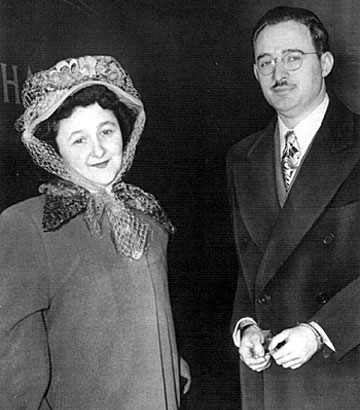
April 5 is best known as the day in 1792 when George Washington used the first presidential veto in U.S. history. The date also saw Julius and Ethel Rosenberg sentenced to death in 1951 and Kareem Abdul-Jabbar pass Wilt Chamberlain as the NBA’s career scoring leader in 1984.
The big story: Washington Issues the First Presidential Veto (1792)
The Constitution gave presidents a veto, but for three years nobody used it. Then Congress sent George Washington a bill dividing seats in the House of Representatives among the states after the first census. The plan would have handed extra seats to northern states, and Washington concluded it broke the Constitution by creating more representatives than the Constitution allowed. He hesitated anyway. The votes in Congress had split North against South, and Washington, a Virginian, worried that a veto would look like favoritism. Secretary of State Thomas Jefferson urged him to do it, arguing that the bill was unconstitutional and that seats should be set by simple arithmetic nobody could dispute. On April 5, 1792, Washington sent the bill back. Congress did not try to override him. It wrote a new law instead, with one House member for every 33,000 people. Washington used the veto only once more, in 1797, on a bill to cut the army’s cavalry.
More events on April 5
| Year | What happened |
|---|---|
| 1614 | Pocahontas, daughter of the Powhatan chief, married English tobacco planter John Rolfe at Jamestown, Virginia (Old Style). The match helped keep peace with the colonists for several years. |
| 1818 | Chile’s independence forces defeated Spanish troops at the Battle of Maipú. |
| 1859 | Charles Darwin sent the first three chapters of On the Origin of Species to his publisher. |
| 1862 | Union General George McClellan reached Yorktown, Virginia, and dug in for a siege instead of attacking, beginning the Peninsula Campaign. |
| 1879 | Chile declared war on Peru and Bolivia, starting the War of the Pacific. |
| 1895 | Oscar Wilde was arrested in England after losing his libel case against the Marquess of Queensberry. |
| 1933 | President Franklin D. Roosevelt signed an order creating Emergency Conservation Work, which became the Civilian Conservation Corps and put Americans to work during the Great Depression. |
| 1951 | A federal judge sentenced Julius and Ethel Rosenberg to death for passing atomic secrets to the Soviet Union. |
| 1955 | Winston Churchill stepped down as Britain’s prime minister. |
| 1984 | Kareem Abdul-Jabbar scored his 31,420th point, passing Wilt Chamberlain as the NBA’s all-time leading scorer. |
| 2000 | Mori Yoshiro became prime minister of Japan. |
| 2008 | American actor Charlton Heston died at 84. |
Born on April 5
- 1588: Thomas Hobbes (Old Style), English philosopher who wrote Leviathan.
- 1908: Bette Davis, American actress of Jezebel and All About Eve, a two-time Oscar winner.
- 1937: Colin Powell, U.S. Army general who became the first African American chairman of the Joint Chiefs of Staff and secretary of state.
Sources
- Washington Exercises First Presidential Veto, History.com
- What Happened on April 5, History.com
- On This Day: April 5, Britannica
- Thomas Hobbes, Britannica
- Bette Davis, Britannica
- Colin Powell, Britannica