Today in History, January 8th
On January 8, 1815, Andrew Jackson won the Battle of New Orleans. Plus Washington's first State of the Union and Wilson's Fourteen Points.
Published · Last updated
January 8 is best known for the Battle of New Orleans in 1815, when Andrew Jackson’s outnumbered army crushed a British assault two weeks after the peace treaty had already been signed. The date also saw George Washington give the first State of the Union address in 1790 and Woodrow Wilson lay out his Fourteen Points in 1918.
The big story: The Battle of New Orleans (1815)
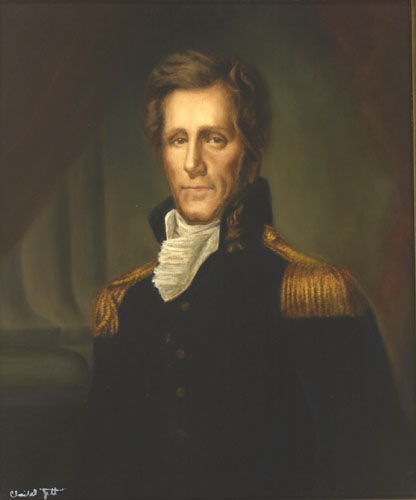
The War of 1812 was technically over. Diplomats had signed the Treaty of Ghent on December 24, 1814, but news crossed the Atlantic by sailing ship, and nobody near New Orleans had heard it. So on January 8, 1815, about 7,500 British troops under Sir Edward Pakenham marched on American lines dug in along the Rodriguez Canal, just outside the city. Waiting for them were roughly 4,500 men under General Andrew Jackson, a mix of regulars, militia and sharpshooters from Kentucky and Tennessee. The British attack fell apart. Nearly 2,000 of them were killed, wounded or missing, Pakenham among the dead. The Americans counted eight killed and 13 wounded. The battle changed nothing about the peace terms. What it changed was the mood. After a war full of embarrassments, including the burning of Washington, the country had a clear, lopsided win, and Jackson had a national reputation that would eventually carry him to the presidency.
More events on January 8
| Year | What happened |
|---|---|
| 1642 | Galileo Galilei, the astronomer who first turned a telescope on the night sky, died in Italy at age 77. |
| 1790 | President George Washington delivered the first State of the Union address to Congress, which was then meeting in New York City. |
| 1867 | Congress overrode President Andrew Johnson’s veto and gave Black men the right to vote in Washington, D.C., three years before the 15th Amendment. |
| 1912 | The South African Native National Congress was founded. It later became the African National Congress (ANC). |
| 1918 | President Woodrow Wilson laid out his Fourteen Points, a plan for peace after World War I, to a joint session of Congress. |
| 1959 | Charles de Gaulle was inaugurated as the first president of France’s Fifth Republic. |
| 1963 | The “Mona Lisa” went on display at the National Gallery of Art in Washington, its first showing in America. President John F. Kennedy attended the opening night. |
| 2002 | President George W. Bush signed the No Child Left Behind Act, setting new federal standards for public schools. |
| 2011 | U.S. Representative Gabrielle Giffords was shot at a constituent event near Tucson, Arizona. She survived; six people were killed. |
| 2016 | Mexican authorities captured drug lord Joaquín “El Chapo” Guzmán about six months after his prison escape. |
| 2023 | Supporters of former Brazilian president Jair Bolsonaro stormed the Congress, Supreme Court and presidential palace in Brasília. |
Born on January 8
- 1823: Alfred Russel Wallace, British naturalist who worked out natural selection alongside Charles Darwin.
- 1935: Elvis Presley, the “King of Rock and Roll,” born in Tupelo, Mississippi.
- 1942: Stephen Hawking, English physicist known for his work on black holes.
- 1947: David Bowie, English singer and songwriter who kept reinventing rock music and himself.
Sources
- The Battle of New Orleans, History.com
- What Happened on January 8, History.com
- On This Day: January 8, Britannica
- Alfred Russel Wallace, Britannica
- Elvis Presley, Britannica
- Stephen Hawking, Britannica
- David Bowie, Biography.com